


Why a 90‑Day, No‑Ads Traffic Plan Works in 2025
Buying clicks is easy. Building compounding, defensible blog traffic is smarter - especially in 2025, when search intent, SERP features, and distribution matter more than ever. A focused 90‑day sprint lets you refresh strategically, launch one high‑leverage content hub, and spin up a simple distribution flywheel - so your blog views keep rising without ad spend. With BlogBowl, you can automate refreshes, internal links, and distribution to boost your blog while you focus on ideas, not busywork.
What you’ll achieve by Day 90
Consistent lift in sessions and blog views without paid ads
At least one content hub launched and ranking for long‑tail keywords
A functioning distribution flywheel (email + social + partnerships)
A documented internal linking system and refresh cadence
Core principles behind this plan
Refresh > publish more: prioritize updating, consolidating, and interlinking
Intent-rich topics: target SERP features and problem-led long‑tails
Distribution-first mindset: every post has a promotion plan
Weekly reporting loop: measure, learn, iterate
"Backlinko saw organic traffic jump 260.7% within 14 days after relaunching updated content." - Source
KPIs that matter (and how to read them)
Sessions and CTR for target pages
Aim for steady week‑over‑week sessions growth; rising CTR indicates tighter titles/meta aligned to intent.
Impressions and average position for hub topics
Growing impressions with stable or improving positions signals coverage breadth and topical authority.
Engagement: time on page, scroll depth, return visitors
Longer dwell and deeper scrolls show content-market fit; rising return visitors validates your distribution.
List growth and email-driven sessions
Track net subscribers and sessions from newsletters; this is your most reliable, compounding distribution channel.
What this plan is not
A one-off checklist (it’s a repeatable cadence)
Dependent on ads or risky tactics
A “publish daily” grind; it’s about strategic compounding moves
How BlogBowl helps: auto-identify refresh candidates, generate internal links across your hub, and schedule multi‑channel distribution. If your goal is to “rank my blog,” this 90‑day, no‑ads plan gives you the compounding foundation to boost your blog and keep growing a blog long after Day 90.
Your 30‑60‑90 Roadmap at a Glance
0–30 days: Baseline, fixes, and fast wins
Audit tech + content; fix indexation and cannibalization
Identify 10 refresh candidates; ship 2–3 quick wins
Map topic clusters and target SERP features
31–60 days: Publish momentum and distribution engine
Launch 1 content hub (pillar + 5–8 spokes)
Implement internal linking system at scale
Stand up email + social syndication workflows
61–90 days: Authority and experience
Digital PR/partnerships for quality links
UX and speed improvements to lift engagement
Build dashboards; ship Q2 roadmap from learnings
Success guardrails
One weekly win shipped (no skipped weeks)
Every URL has a job: rank, support, convert, or capture email
Report progress in plain language tied to business goals
"People-first content means content that's created primarily for people, and not to manipulate search engine rankings." - Source
30‑60‑90 snapshot
This table summarizes the phases, goals, primary tasks, and KPIs for quick skimming.
Phase | Goals | Primary Tasks | Key KPIs |
|---|---|---|---|
0–30 days | Establish baseline and ship quick wins | Fix indexation/cannibalization, select 10 refreshes, map clusters and SERP features | Indexed pages, errors resolved, first refresh wins (sessions, CTR) |
31–60 days | Build momentum and distribution | Launch hub (pillar + 5–8 spokes), internal links at scale, email + social syndication | Impressions/position for hub topics, internal link counts, email-driven sessions |
61–90 days | Strengthen authority and UX | Digital PR/partnerships, UX/speed lifts, dashboards and Q2 roadmap | Referring domains, Core Web Vitals, time on page/scroll depth, weekly wins shipped |
Weeks 1–2: Foundation, Baseline, and Editorial Focus
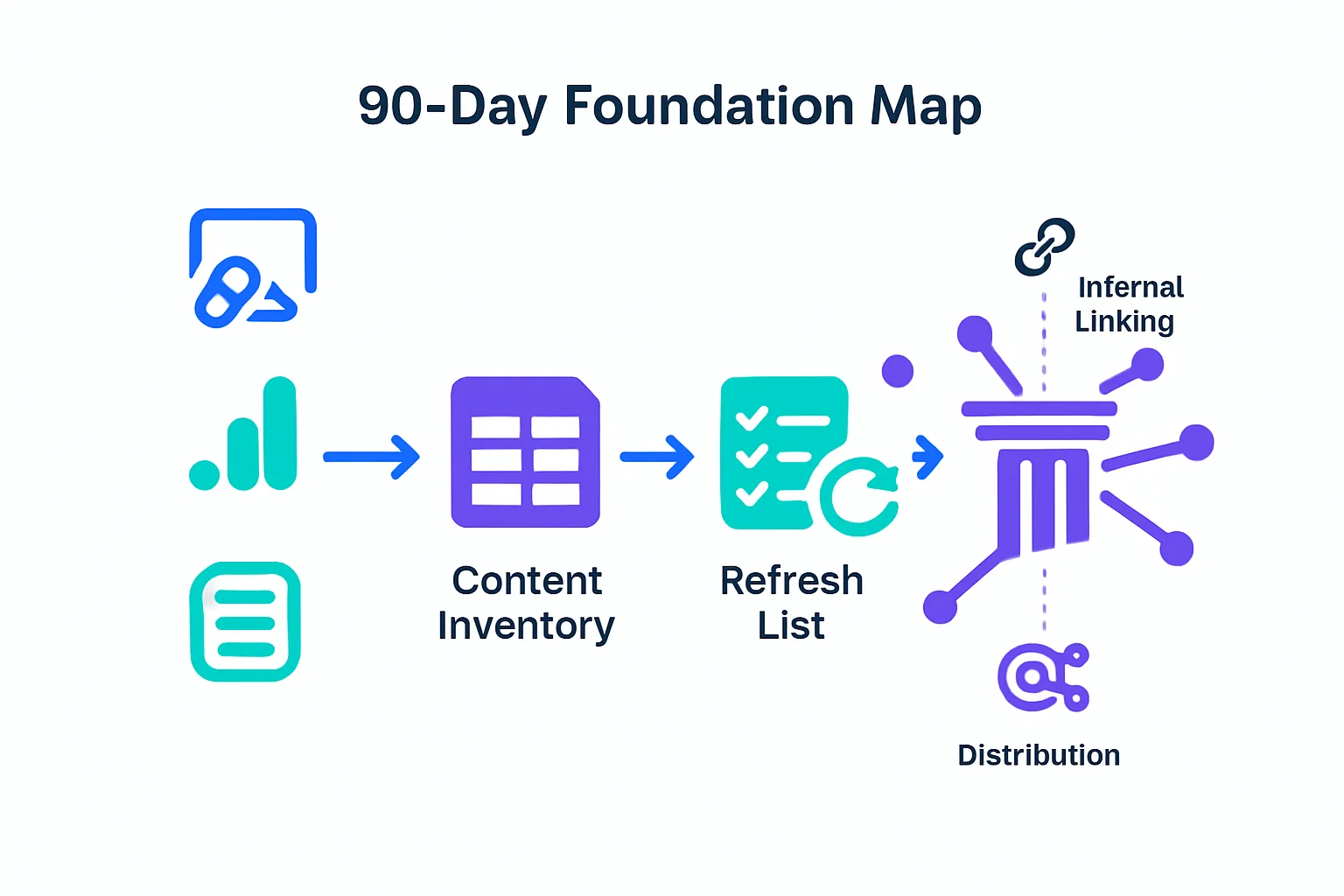
Technical + analytics setup
Verify GA4 + Search Console; set conversion events and collections
Crawl the site; fix robots/noindex, canonicals, and sitemap issues
Capture Core Web Vitals and mobile UX baseline
Content inventory and gap analysis
Export all URLs with traffic, links, impressions, last update
Flag thin, duplicate, and cannibalized posts to prune/merge
Identify 10 high‑potential refreshes (stuck on page 2 or declining)
Editorial strategy for 90 days
Choose 2–3 themes (content hubs) aligned to revenue or sign‑ups
Outline pillar + spokes; document search intent and SERP features
Define “post job”: rank, support, convert, or capture email
Tooling for scale
Set up an internal linking tracker and anchor text rules
Create repeatable briefs (outline, FAQs, schema, EEAT signals)
Optional: Spin up BlogBowl to automate keyword research, internal linking, AI media, and newsletter distribution
Weeks 3–4: Quick Wins - Refreshes, Pruning, and Internal Links
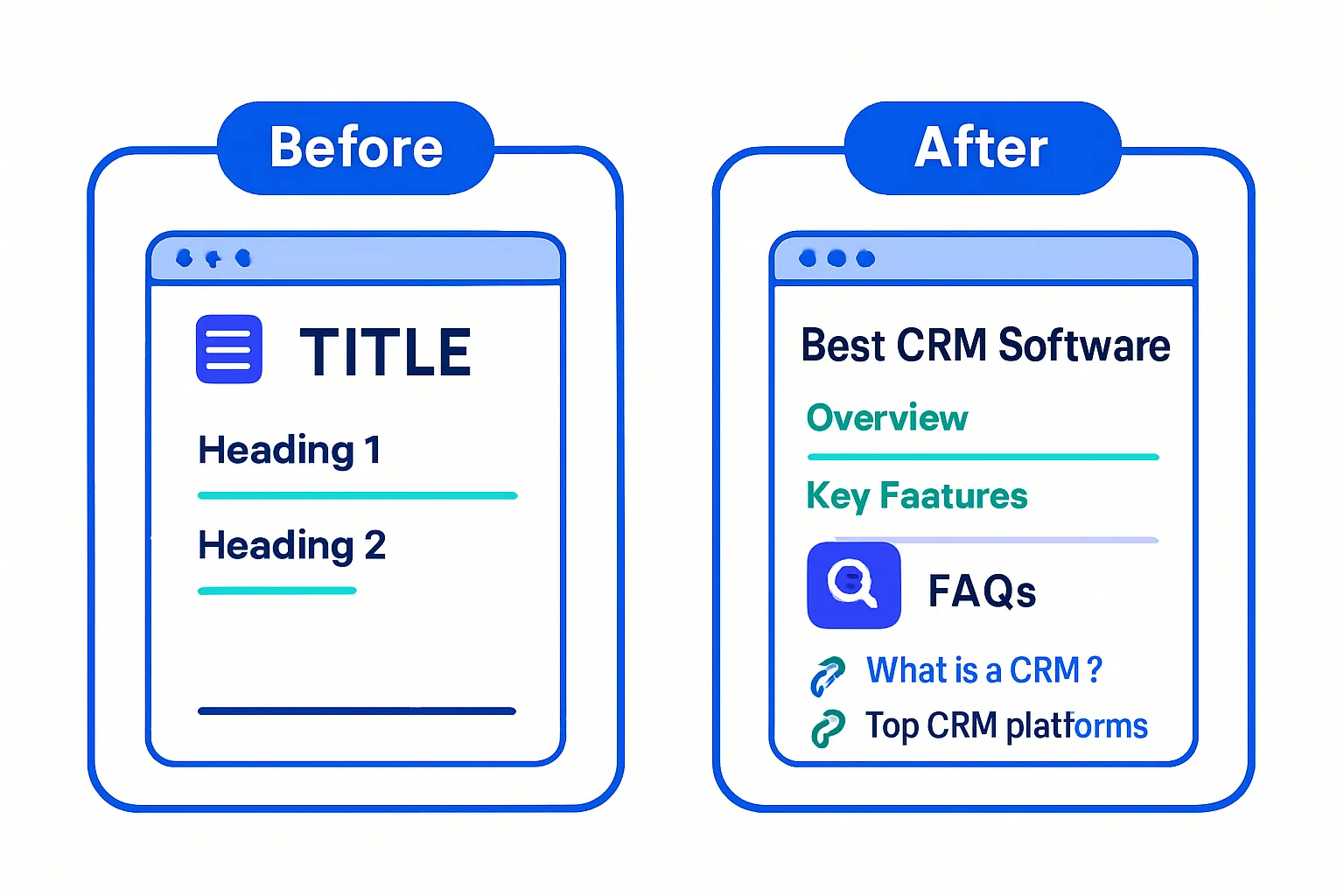
Ship refreshes that move the needle
Update 3–5 declining posts: add depth, FAQs, examples, fresh stats
Rework titles/meta to match intent and raise CTR
Add schema (FAQ/HowTo) where relevant
Prune and consolidate
Merge cannibalized posts; 301 to the strongest URL
Remove deadweight that won’t rank or convert
Internal linking sprint
From top pages, add contextual links to target URLs with descriptive anchors
Add “Next step” CTAs to move readers deeper
Measurement loop
Track ranking/CTR shifts at day 7 and 14
Log learnings in a win tracker (what changed, why it worked)
Weeks 5–6: Build the Hub - Topic Clusters and SERP Feature Targeting
Launch your first content hub
Publish 1 pillar guide + 5–8 spokes around a single theme
Interlink pillar ↔ spokes; add breadcrumb and related links
Align each URL to a single intent; avoid overlap to minimize cannibalization
Win SERP features (zero‑click doesn’t mean zero value)
Structure content for featured snippets, PAA, and “From sources across the web”
Implement schema: FAQ, HowTo, Article, Product/Review where relevant
Add concise, scannable summaries (40–60 words), step lists, and comparison tables where they fit the query
EEAT and originality signals
Add expert bylines, sources, and original insights/data
Include visuals created for the post (not stock only)
Add author bios, last‑updated dates, and methodology notes to strengthen trust
Iterate quickly
Refresh underperforming spokes within 10–14 days based on GSC data
Tighten titles/meta to match query intent and improve CTR
Expand missing subtopics surfaced by PAA or related searches
SERP Feature Targeting Matrix
A quick‑skim matrix to guide patterns, schema, and measurement for your hub launch.
Feature | Content Pattern | Required Schema | Measurement (impressions/CTR) |
|---|---|---|---|
Featured Snippet (Paragraph/List/Table) | 40–60 word definition, step list (1–8), or compact comparison table near the top | Article; HowTo (for steps); FAQ (optional) | GSC: query‑level impressions/CTR; rank vs snippet‑owning URL |
People Also Ask (PAA) | H2/H3 questions with 1–2 sentence direct answers + optional expansion | FAQPage (section), Article | GSC: impressions for question queries; CTR change after Q&A adds |
“From sources across the web” | Concise definition/excerpt that directly answers core query; consistent wording | Article; proper headings and citations | Impressions on target head term; brand presence on SERP checks |
Image Pack | Unique diagrams/screens, labeled figures, alt text with entities/keywords | ImageObject via Article | GSC Image impressions; CTR from image results |
HowTo Rich Result | Clear steps, tools/materials, image per key step | HowTo | GSC Search Appearance: Rich results impressions; CTR vs baseline |
FAQ Rich Result | 2–4 FAQs with direct, non‑promotional answers | FAQPage | GSC Search Appearance: FAQ impressions; CTR (availability may vary) |
Review/Stars | Comparative or product reviews with criteria and summary rating | Review / AggregateRating / Product | CTR lift on commercial queries; impressions on review variants |
Sitelinks (enhanced navigation) | Strong internal nav, descriptive anchors, logical headings | Article (no direct schema; rely on site structure) | Branded query CTR; sitelinks visibility in SERP |
Tip: Use BlogBowl to auto‑generate schema, interlink pillar ↔ spokes, and embed AI visuals so your hub is both skimmable for users and legible to search engines. This helps boost your blog, grow blog traffic, and “rank my blog” for the right long‑tail queries.
Weeks 7–8: Distribution Engine - Email, Social, and Partnerships
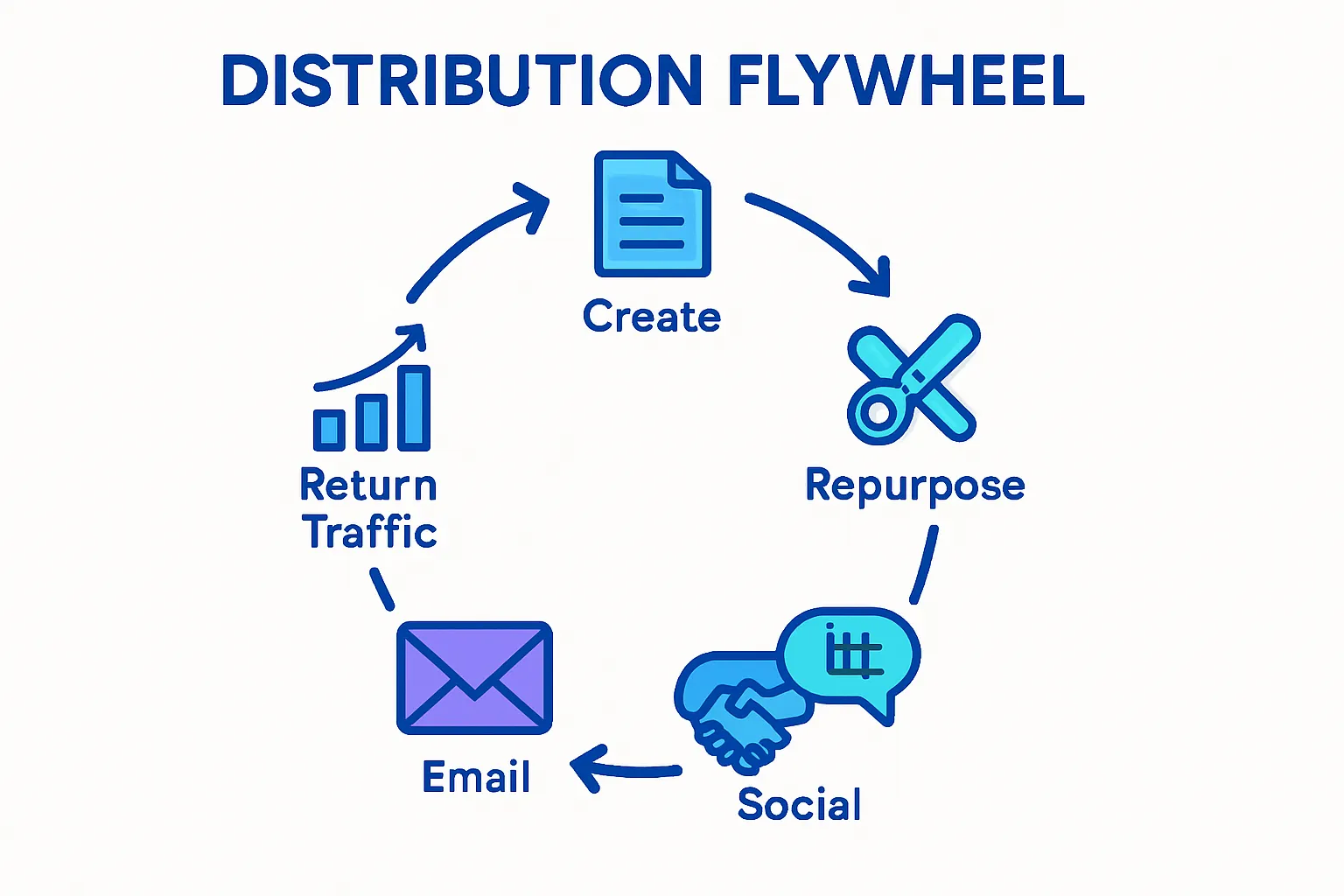
Email that compounds
Launch a simple weekly newsletter + 3‑email welcome series
Add content upgrades for top posts to grow the list
Segment by interest where possible; keep CTAs focused on one next step
"Email marketing delivers an average ROI of $36 for every $1 spent." - Source
Social repurposing at scale
Pull 6–8 micro‑assets per post (quotes, stats, carousels, short videos)
Prioritize channels where your audience already engages
Schedule posts in a 10–14 day arc per article; test 2–3 hooks per channel
Partnerships that travel
Line up 2 guest posts, one co‑webinar/AMA, and 1 newsletter swap
Pitch “useful first” assets (templates, checklists, unique dataset)
Offer reciprocal internal links to relevant spokes to strengthen the hub
Track distribution ROI
UTM every share; report sessions and assisted conversions from each channel
Monitor list growth, email‑driven sessions, and partner referral traffic
Fold learnings into next month’s content calendar and distribution cadences
Weeks 9–10: Authority - Digital PR, Links, and Brand Mentions
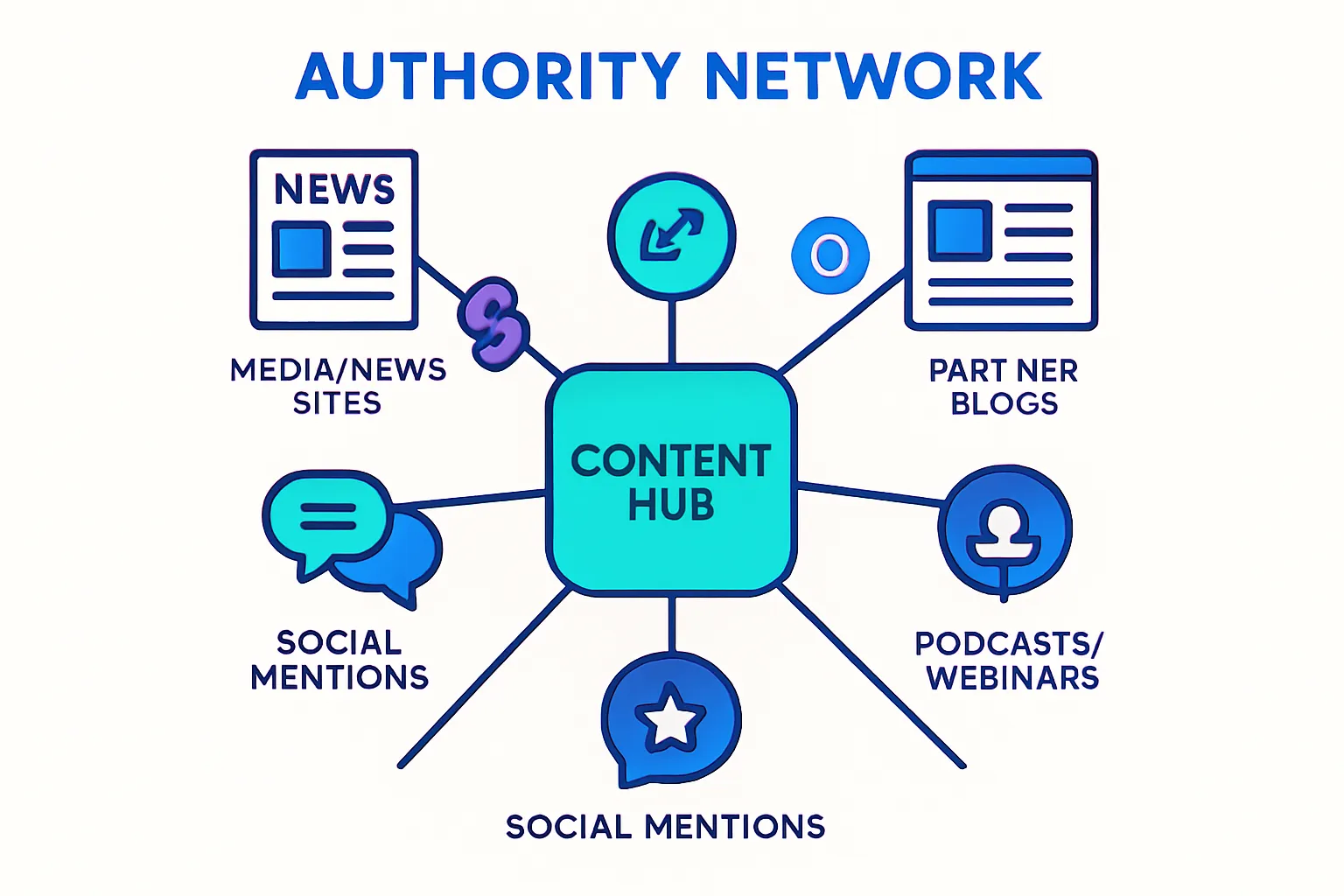
Link‑earning campaigns
Publish a small original dataset or mini‑report others will cite
Pitch journalists/creators with 2–3 quotable insights
Package visuals (charts, diagrams) for easy embedding and attribution
Smart outreach (quality > quantity)
Target relevant, high‑fit sites and communities
Offer expert commentary or a tactical guest tutorial
Personalize pitches with a clear “why this helps their audience”
Build relationship assets
Create an “industry stats” page you can update quarterly
Leverage BlogBowl’s automatic backlink exchange to find relevant partners
Maintain a media kit with bio, headshot, and topic expertise for quick turnaround
Monitor and protect
Track new referring domains; disavow obvious spam if needed
Annotate links tied to campaigns to measure impact on hub rankings
Watch for brand mentions without links and request attribution
Weeks 11–12: UX, Speed, and Conversion - Make Traffic Stick
Turn rising sessions into returning readers and subscribers. In these two weeks, you’ll harden performance, streamline reading, and tighten conversion paths so your growing blog traffic compounds without ads.
Speed and stability
Address Core Web Vitals issues (LCP, INP, CLS)
Compress images, lazy‑load media, limit render‑blocking scripts
Preload critical assets and implement caching/CDN for global visitors
Reader experience
Improve readability (short paragraphs, scannable subheads, tables of contents)
Add inline CTAs and next‑step modules
Use contrast‑safe color, larger tap targets, and unobtrusive consent banners
Conversion paths
Map top paths to newsletter/signup pages
Test one CTA placement and one lead magnet per week
Align offers with post intent (checklist for how‑tos, templates for guides, mini‑course for hubs)
Measure behavior
Use scroll/engagement heatmaps; compare before/after changes
Track “time to first click” and “article completion rate” alongside conversions
Roll winning variants into your BlogBowl templates to boost your blog at scale and “rank my blog” with stronger engagement signals
Week 13: Report, Learn, and Scale the Playbook
You’ve spent 12 weeks building momentum. Now turn results into a repeatable engine to boost your blog, grow blog traffic, and keep compounding wins without ads.
Report what matters
Summarize wins: top pages, new rankings, sessions, and email list growth (week-over-week and total lift)
Highlight hub performance: impressions/avg. position for pillar and spokes, CTR gains from refreshes
Show assisted conversions and time‑to‑value from key initiatives (refreshes, internal links, partnerships)
Call out “defensive wins” (fixes that protected rankings or improved Core Web Vitals)
Codify the system
Document refresh cadence (how you select, brief, and QA updates), internal linking rules (anchors, priority paths), and a standard briefing template (intent, outline, FAQs, schema, EEAT)
Finalize distribution SOPs for email, social, and partner outreach (UTM conventions, weekly cadence, approvals)
Lock your next‑quarter roadmap: Hub #2 themes, refresh backlog (by impact score), Digital PR calendar, UX improvements
Create a shared glossary for target entities, preferred terms, and brand voice so every contributor stays aligned
Templates to keep shipping
Win tracker: what changed, when, why it worked, impact on sessions/CTR/position
Hub planner: pillar topic, 5–8 spokes, target SERP features, schema, internal link map
Distribution checklist: email (subject/preview, segment, CTA), social (hooks/creative), partners (asset/angle/UTM)
Analytics snapshot: weekly dashboard for target URLs (Sessions, CTR, Position, Scroll Depth, Email‑driven Sessions)
Share the story
Present a simple narrative: problem → action → impact → next
Show 2–3 concrete examples (before/after titles, schema adds, internal link paths) to make wins tangible
Close with the Q2 plan: what you’ll scale (content hubs, refresh cadence, partnerships) and the KPIs you’ll move
Pro tip: Save all of this in BlogBowl as reusable templates - briefs, internal linking maps, and distribution checklists - so your team can rank my blog faster, increase blog views predictably, and keep growing a blog with a clear, repeatable playbook.
Conclusion: Start Compounding Results with BlogBowl
Why BlogBowl fits this plan
Launch fast with SEO‑optimized templates and built‑in analytics
Automate daily content ideas, internal linking, and embedded media
Run multiple blogs, publish on custom domains, and send newsletters - all in one place
AI‑powered refresh suggestions and keyword research to grow blog traffic faster
Distribution baked in: schedule email, social, and partner syndication from a single dashboard
Your next three steps
Spin up your BlogBowl blog (60 seconds)
Import your refresh list and enable internal linking automation
Turn on newsletter to start your distribution flywheel
Ready to boost your blog traffic in 90 days without ads? Put this playbook on autopilot with BlogBowl and focus on strategy while we handle the heavy lifting. Grow blog views, rank my blog keywords, and keep growing a blog with a system built for compounding results.