


Blog Newsletter Ideas to Grow Subscribers Faster
Your blog is already doing the hard part: attracting attention. A great blog newsletter turns that attention into an audience you actually own.
For SaaS founders, startup teams, indie hackers, and B2B marketers, that matters a lot. Organic traffic fluctuates. Social reach disappears overnight. But a newsletter gives you a direct line to readers who want updates, insights, launches, and useful content from your brand.
The problem? Most blog newsletters are either too generic, too promotional, or too hard to keep consistent.
This guide fixes that. You’ll get practical blog newsletter ideas, proven formats, content angles, growth tactics, and a simple system to turn blog traffic into subscribers and subscribers into customers.
"Businesses earn between $36 and $42 for every dollar spent on email marketing campaigns." - verified.email
"As of 2026, the global number of email users is estimated to be between 4.59 billion and 4.73 billion." - clean.email
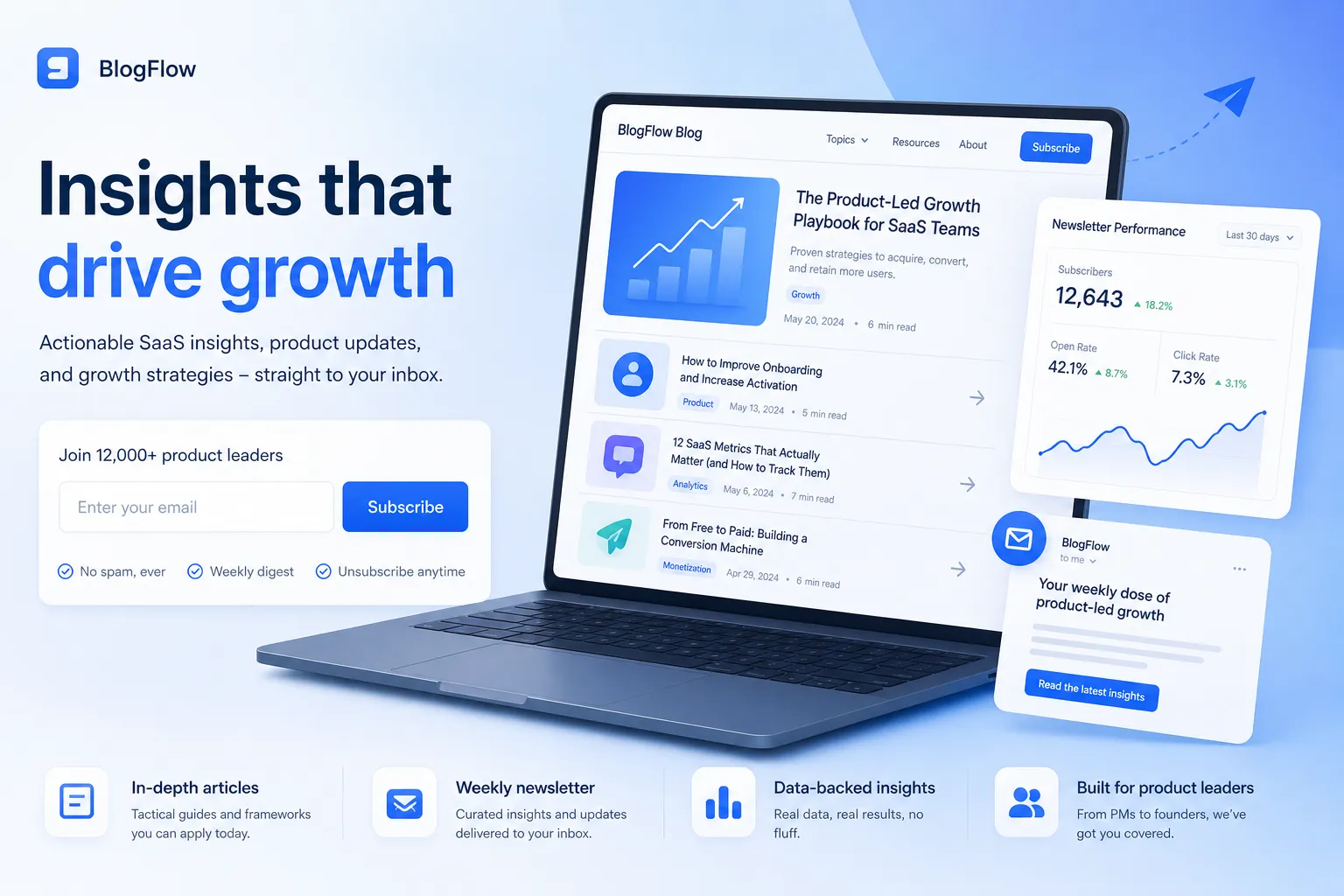
What a blog newsletter actually does
A blog newsletter is not just a recap email.
Done right, it helps you:
turn one-time readers into repeat visitors
distribute new posts without depending on algorithms
build trust over time with subscribers in your niche
create a faster path from content to demo, trial, or purchase
support launches, product education, changelogs, and help docs in one channel
For SaaS brands especially, a blog newsletter sits at the center of the content engine. Your blog attracts search traffic. Your newsletter keeps that audience warm. Your product content, updates, and educational emails move them closer to action.
Why competitor advice is useful, but incomplete
Across the top-ranking articles, a few themes show up again and again:
roundups and curated content work well
educational tips and how-tos drive engagement
product updates and announcements matter
polls, surveys, and customer stories keep readers interested
urgency, discounts, and exclusives can boost clicks
All true. But most competitor posts stop at ideas.
What they often miss:
How to choose the right newsletter format for a blog
How SaaS teams can connect blog, changelog, help docs, and newsletters
How to build a repeatable editorial system
How to optimize for subscriber growth from blog traffic
How to measure whether the newsletter is actually working
That’s where this guide goes deeper.
What makes a strong blog newsletter
A strong blog newsletter does three simple things:
Element | What it means | Why it matters |
|---|---|---|
Relevance | The content matches why the reader subscribed | Better opens and fewer unsubscribes |
Consistency | It arrives on a predictable cadence | Builds habit and trust |
Clear value | It teaches, updates, inspires, or saves time | Gives people a reason to stay subscribed |
If your newsletter feels random, readers tune out. If it feels useful and reliable, it becomes part of their routine.
The best blog newsletter formats for SaaS and B2B brands
Before choosing newsletter ideas, choose your format. That makes planning much easier.
1. The weekly roundup
Best for brands publishing multiple blog posts, updates, or links each week.
Include:
newest blog posts
product updates
one useful external resource
quick company note
soft CTA
Best when you want a consistent, low-friction newsletter.
2. The editorial letter
Best for founder-led brands, opinionated companies, and niche experts.
Include:
one main topic
your perspective
one supporting example
one CTA
Best when you want personality and thought leadership.
3. The educational digest
Best for product marketers, customer success teams, and B2B educators.
Include:
one problem
one framework or lesson
one example
related help doc or blog post
next step CTA
Best when you want to build trust through useful content.
4. The product-led newsletter
Best for SaaS companies shipping fast.
Include:
new features
changelog highlights
customer use cases
adoption tips
links to docs or tutorials
Best when you want the newsletter to support activation and retention.
5. The curated niche brief
Best for teams building authority in a tight industry category.
Include:
top news
trends
expert commentary
hand-picked links
short takeaways
Best when you want to become a must-read source.
17 blog newsletter ideas that actually grow subscribers
Below are the newsletter ideas most likely to work for a blog-led SaaS or B2B brand.
1. New post roundup
The simplest place to start. Bundle your latest posts into one short, well-formatted email.
Why it works:
easy to produce
promotes multiple posts at once
trains readers to expect regular updates
Make it better:
add a one-line takeaway under each link
highlight the best post first
include a “read time” hint
2. One big idea from your latest blog post
Instead of just linking to the article, pull out the core lesson and deliver it in the email itself.
Why it works:
gives instant value
improves click quality
positions your brand as helpful, not needy
This format is perfect for turning SEO traffic into subscribers because it shows the newsletter itself has value, not just the blog.
3. Founder’s note plus one useful link
A short personal note can make a blog newsletter feel human fast.
Use it to share:
what your team is learning
a market observation
a product-building lesson
a mistake you made and fixed
Then include one strong related blog link.
4. The “3 things this week” format
This is a lightweight format that’s easy to sustain.
Example:
1 lesson
1 blog post
1 tool or resource
It feels manageable for the writer and easy to scan for the reader.
5. Changelog-to-newsletter highlights
If you run a SaaS company, your changelog should not live in isolation. Turn key releases into newsletter content.
Include:
what changed
why it matters
who it helps
what to try next
This is especially effective for product-led growth.
6. Help doc spotlight
Your help center is a hidden content asset. Feature one useful help article in the newsletter.
Great examples:
setup tutorials
onboarding shortcuts
troubleshooting tips
best practice guides
This drives product adoption while showing subscribers your brand solves real problems.
7. Customer story breakdown
Take a customer win and turn it into a short, practical story.
Structure:
the challenge
what they tried
what worked
the result
link to deeper case study or post
This adds proof without sounding like a hard sell.
8. Industry trend reaction
Summarize one trend and give your take.
Why it works:
shows expertise
creates urgency and relevance
helps readers make sense of noisy markets
This works well for MarTech, SaaS, analytics, productivity, and AI categories.
9. Template or framework email
Offer one useful template, checklist, or framework from a blog post.
Examples:
SEO brief template
onboarding email sequence
product launch checklist
support documentation structure
These emails get saved, forwarded, and shared.
10. Curated “best reads” issue
Pull together 3 to 5 useful links, including at least one of your own.
Make it stronger by adding:
why you picked each one
what readers will learn
who it’s best for
Curated newsletters can become habit-forming fast.
11. Poll-driven newsletter
Ask one question. Share the result later. Tie it to blog content.
Example:
“What’s your biggest content bottleneck right now?”
next issue includes the winning answer plus a practical guide
This makes the newsletter feel interactive.
12. Seasonal or launch-based newsletter
Use timing to your advantage.
Examples:
quarterly planning issue
year-end content audit
Black Friday prep for SaaS
annual trends forecast
Timely content often gets higher open rates because it aligns with current priorities.
13. The “what we learned” edition
Recap lessons from experiments, launches, campaigns, or content performance.
Share:
what you expected
what actually happened
what you changed
what readers can copy
People love transparent learning.
14. Newsletter-only insight
Give subscribers something they cannot get on the blog.
Examples:
raw metrics
behind-the-scenes decisions
early feature previews
internal workflow screenshots
audience-specific tips
Exclusivity is one of the best retention levers.
15. Mini course by email
Turn one topic into a 3- to 5-email series.
Great topics:
how to launch a company blog
how to write SaaS changelog updates
how to turn blog traffic into leads
how to build a help center that ranks
This is excellent for onboarding new subscribers.
16. Blog + product combo issue
Blend education with product relevance.
Structure:
blog lesson
how it connects to your product
supporting doc, feature, or use case
CTA
This is one of the cleanest ways to make a newsletter conversion-focused without being pushy.
17. Monthly “best of” digest
A monthly digest is ideal if weekly feels too aggressive.
Include:
best post of the month
most useful doc
top product update
one interesting metric or customer insight
what’s next
This works especially well for lean teams.
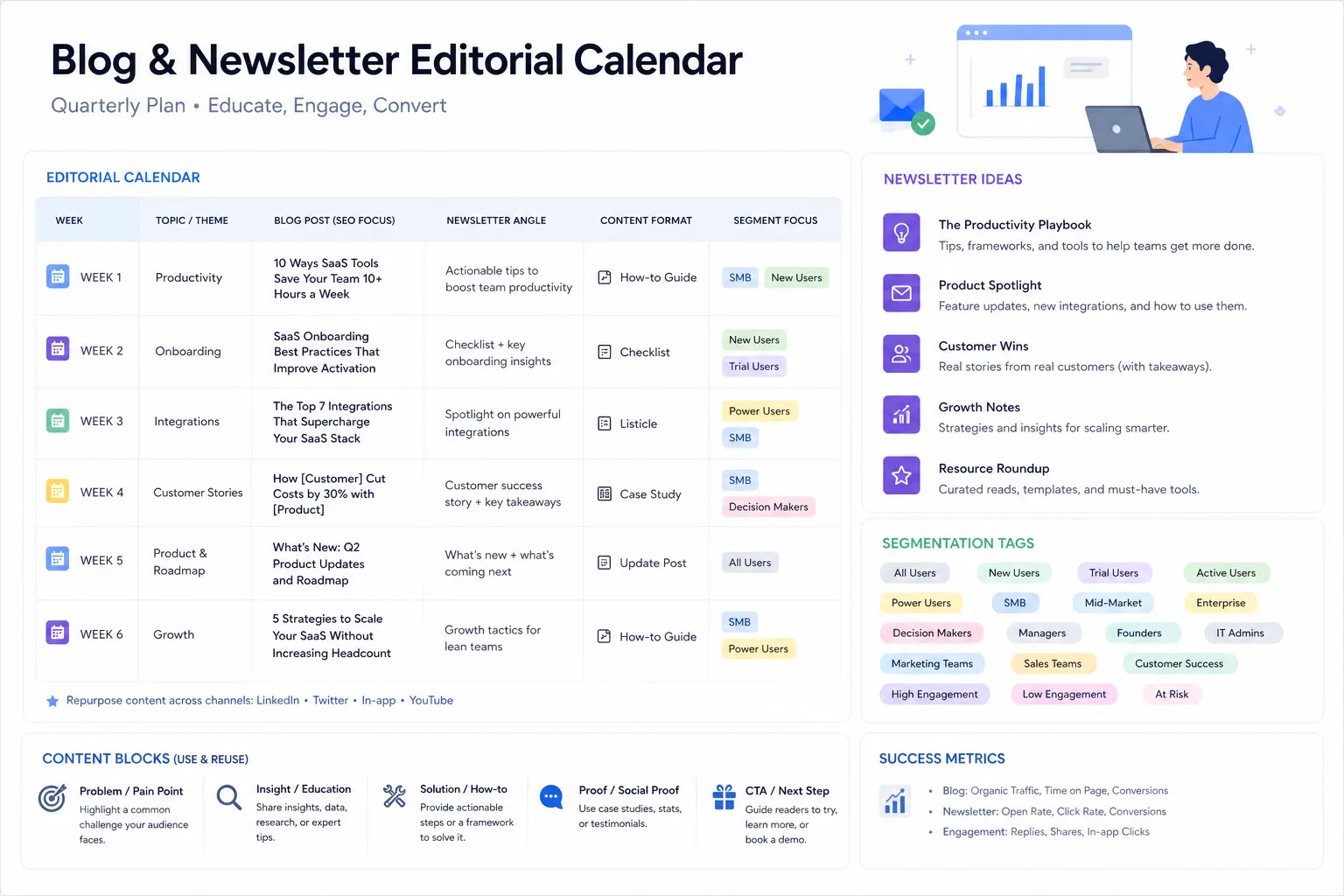
How to choose the right blog newsletter idea
Not every idea fits every team. Use this shortcut.
Your goal | Best newsletter ideas |
|---|---|
Grow subscribers | roundups, templates, curated best reads, mini course |
Increase repeat blog traffic | new post roundup, one big idea, monthly digest |
Drive product adoption | changelog highlights, help doc spotlight, blog + product combo |
Build thought leadership | founder’s note, trend reaction, what we learned |
Improve engagement | polls, customer stories, newsletter-only insights |
A good rule: start with one core format and one secondary recurring angle. For example:
core format: weekly roundup
recurring angle: one subscriber-only insight
That keeps it simple and recognizable.
The easiest blog newsletter structure to follow
If you want a reliable template, use this:
Simple weekly template
Subject line: One clear promise
Preview text: Why this issue matters now
Body
Opening sentence with context
Main takeaway or insight
2 to 3 blog links with mini descriptions
Optional product/doc/update block
One CTA
That’s enough. Most newsletters get worse when they try to do too much.
Subject line ideas for a blog newsletter
Your content quality matters, but first people need to open.
Try these patterns:
3 blog ideas to steal this week
What we learned from publishing 50 posts
New: our best guide on SaaS onboarding SEO
5-minute read: how to turn blog traffic into signups
We tested this on our blog. Here’s what happened.
This week’s changelog, top post, and one shortcut
The fastest way to grow blog subscribers in 2026
Keep subject lines clear, specific, and curiosity-driven.
How to turn blog readers into newsletter subscribers faster
This is where most advice stays shallow. A good newsletter is only half the job. The other half is capture.
Place signup CTAs where intent is highest
Best placement options:
after the intro of high-traffic posts
mid-article in long guides
end-of-post CTA
sticky sidebar
exit-intent prompt
changelog and docs pages
author bio or inline content blocks
Match the CTA to the page
A generic “subscribe to our newsletter” converts worse than a page-specific CTA.
Examples:
on an SEO article: “Get one practical SEO insight each week”
on a changelog page: “Get product updates in your inbox”
on a help article: “Get new tutorials and support tips first”
Give a reason to subscribe now
Use a real value promise:
weekly practical tips
curated resources
product updates
early access
exclusive insights
email mini-course
Reduce friction
Ask for as little as possible. Usually just email.
Use a welcome sequence
The first email should:
confirm the promise
deliver value immediately
show what to expect next
point to your best blog content
The blog newsletter growth funnel SaaS teams should use
Here’s the simple model:
Attract readers through SEO, social, and referrals
Convert them with high-intent newsletter CTAs
Nurture them through valuable recurring emails
Activate them with product education, changelog updates, and helpful docs
Retain them with consistent insights and relevance
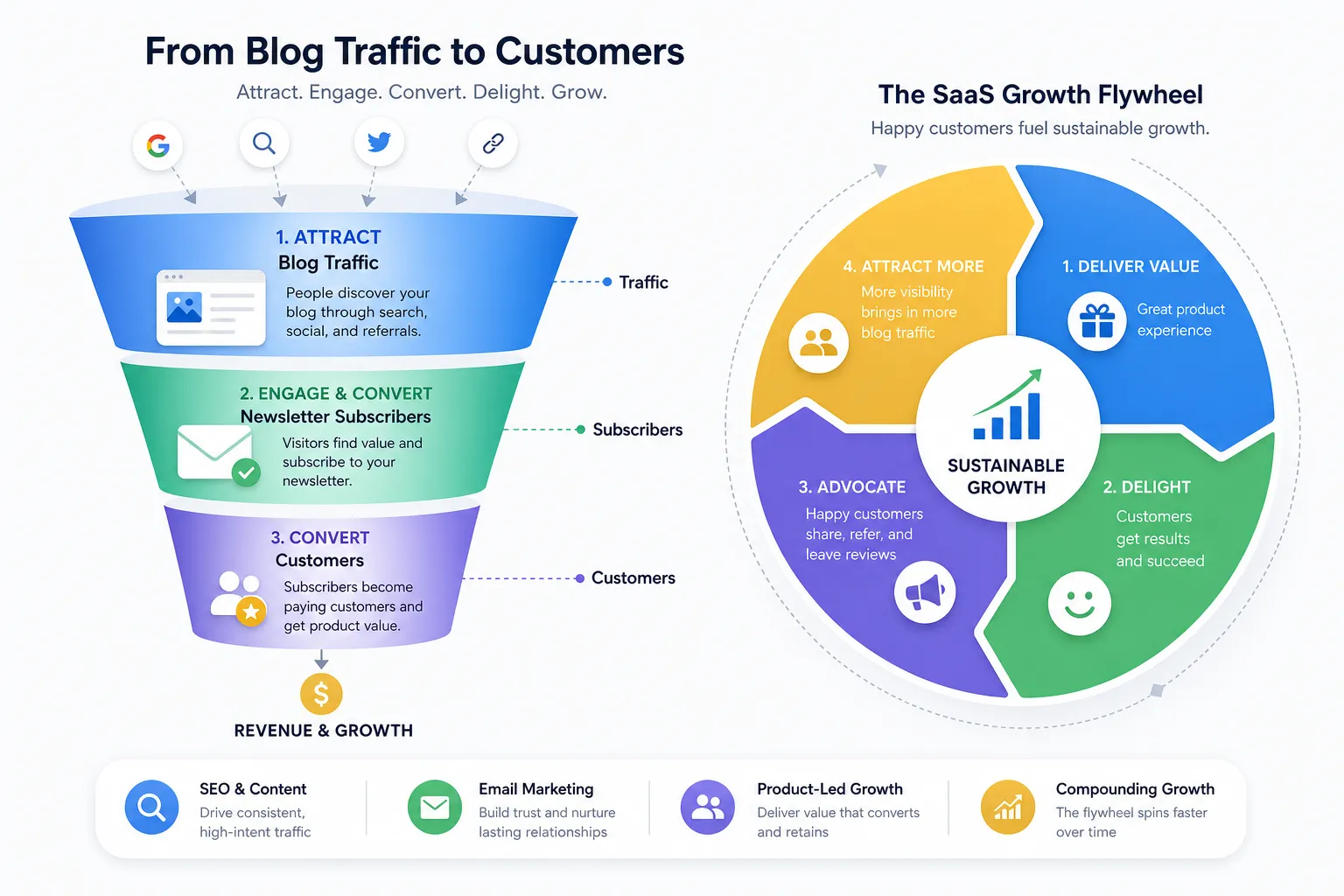
The key insight: your blog newsletter should not sit outside your content system. It should be built into it.
Why BlogBowl is built for this workflow
Most teams end up duct-taping together:
a CMS
an email tool
a changelog tool
a knowledge base
an analytics platform
a form or popup app
That’s slow, fragmented, and painful to maintain.
With BlogBowl, you can launch a blog, changelog, and help center in minutes without setup headaches. It’s built for teams that want to publish fast, rank faster, and grow an audience without engineering bottlenecks.
What makes BlogBowl a strong fit for blog newsletters
No-code publishing so marketers and product teams can publish without developer help
SEO-optimized templates designed for speed, structure, and rankings
Built-in newsletter to collect subscribers, send campaigns, schedule issues, and track results
Integrated analytics dashboard powered by Umami for clear traffic and engagement insight
Custom domain support with flexible URL and hosting options
Unlimited blogs, changelogs, and help docs on paid plans
Open-source core for control and extensibility
Multi-author collaboration for growing teams
Lightning-fast mobile-friendly UX that makes every content surface easier to consume
That means your blog newsletter can live inside the same publishing system as your blog posts, product updates, and support content.
Instead of patching together tools, you run one clean workflow.
Blog newsletter content calendar you can steal
If you need a starting point, use this 4-week cycle.
Week | Newsletter type | Goal |
|---|---|---|
Week 1 | New post roundup | drive traffic |
Week 2 | One big idea + product tie-in | educate and convert |
Week 3 | Curated best reads + opinion | build authority |
Week 4 | Changelog/help doc/customer story | activate and retain |
This rhythm keeps the newsletter useful without making every issue feel identical.
How often should you send a blog newsletter?
The best frequency is the one you can sustain without sacrificing quality.
Good starting points
weekly for active publishing teams
biweekly for lean SaaS teams
monthly for smaller brands or founder-led newsletters
Consistency beats volume.
A weekly newsletter with substance will outperform a daily stream of filler.
What to track in a blog newsletter
Many teams obsess over open rates and stop there. That’s not enough.
Track these metrics:
Metric | What it tells you |
|---|---|
Subscriber growth rate | whether your blog capture strategy is working |
Click-through rate | whether content is compelling |
Click-to-open rate | whether the email body delivers on the subject line |
Unsubscribe rate | whether relevance is slipping |
Referral traffic to blog | whether the newsletter drives repeat visits |
Product/doc clicks | whether readers are moving deeper into your ecosystem |
Conversion rate | whether subscribers become leads or users |
With BlogBowl’s built-in newsletter and integrated analytics, you can track subscriber behavior and content performance without jumping between disconnected tools.
That’s a major advantage for lean teams who want answers fast.
Common blog newsletter mistakes to avoid
Sending only promotional emails
If every email sells, subscribers stop caring.
Making the newsletter a link dump
Curate. Frame. Explain why links matter.
Ignoring onboarding
Your welcome sequence shapes expectations more than any later issue.
Publishing without a clear promise
People subscribe for a reason. Make that reason obvious.
Treating blog, changelog, and docs as separate worlds
For SaaS, they’re connected. Your newsletter should connect them too.
Using bloated tooling
Every extra tool adds friction, cost, and maintenance.
A practical launch plan for your blog newsletter
If you’re starting from scratch, use this checklist.
Week 1: define the newsletter
pick the format
define audience
write the value promise
choose frequency
Week 2: set up capture
add inline CTAs to top blog posts
create a simple signup form
write welcome email
add a thank-you page
Week 3: create first 3 issues
one roundup
one educational issue
one product/help/changelog issue
Week 4: publish and refine
send issue one
track clicks and signups
improve CTA placement
adjust based on data
If you want the easiest route, BlogBowl shortens this setup dramatically because the blog, newsletter, analytics, and supporting content surfaces already live together.
Tool comparison: all-in-one vs stitched stack
A lot of teams ask whether they should use separate tools or a unified system.
Need | Stitched stack | BlogBowl |
|---|---|---|
Blog publishing | separate CMS | built in |
Newsletter sending | separate email platform | built in |
Subscriber capture | third-party forms | built in CTA blocks |
Changelog | separate tool | built in |
Help docs | separate KB platform | built in |
Analytics | extra setup and scripts | integrated dashboard |
Custom domain | often more configuration | supported |
Team collaboration | varies by tool | multi-author ready |
For startups and SaaS teams, simpler systems usually win because they remove setup drag and let you focus on shipping content.
Competitor examples worth learning from
The competitor articles surface useful patterns:
Campaign Monitor’s strength
A broad range of newsletter content ideas.
beehiiv’s strength
Practical growth tactics and examples of newsletter acquisition.
Aethonic’s strength
Clear engagement-focused content angles and direct commercial framing.
The missing layer
Very little guidance on building a blog-centered newsletter system for SaaS teams that need blogging, changelogs, docs, newsletters, and analytics to work together.
That’s the gap modern teams should care about most.
Final verdict
A high-performing blog newsletter is not just another email asset. It is the bridge between search traffic and owned audience.
If you want more subscribers faster, focus on three things:
a clear reader promise
a repeatable format
tight integration between blog content, subscriber capture, and email delivery
That’s exactly why platforms like BlogBowl are compelling. You can launch a blog, changelog, and help center in minutes, publish with no code, collect subscribers with built-in CTAs, send newsletters from the same system, and track what works from one clean dashboard.
No setup maze. No tool sprawl. No waiting on engineering.
If you want to turn your content hub into a subscriber growth engine, try BlogBowl and build your blog newsletter where your content already lives.
FAQ
How can I increase my newsletter subscribers?
Increase subscribers by adding high-intent signup CTAs inside blog posts, changelog pages, and help docs, then giving readers a clear reason to join. Offer a strong promise like weekly tips, product updates, or exclusive insights, and follow up with a useful welcome sequence.
What is the 3/2/1 newsletter?
The 3/2/1 newsletter is a simple format that usually includes three ideas, two quotes or insights, and one question or takeaway. It works because it is easy to scan, highly repeatable, and builds a consistent reading habit.
How to increase blog subscribers?
To increase blog subscribers, place page-specific newsletter CTAs inside your highest-traffic posts and match the offer to reader intent. You should also send useful, consistent issues so subscribers feel the value immediately and keep coming back.
How to get your first 1000 newsletter subscribers?
Get your first 1000 subscribers by combining SEO blog traffic, strong inline signup prompts, a compelling lead promise, and a consistent send schedule. Start with one repeatable format, optimize your top-performing posts for capture, and keep improving based on click and signup data.
What is the 3/2/1 newsletter?
The 3/2/1 format is a lightweight newsletter structure popular because it is easy to produce and easy to read. It helps creators and brands stay consistent while delivering value in a tight, memorable layout.
What is the 30/30/50 rule for cold emails?
The 30/30/50 rule for cold emails generally refers to balancing targeting, messaging, and follow-up effort rather than blasting one generic pitch. For newsletters and blog growth, the lesson is similar: strong results come from relevance, a clear value promise, and consistent optimization.