


Best Blog Hosting Platforms
Launching a blog should not feel like starting a side project for your engineering team.
If you're a SaaS founder, startup marketer, indie hacker, or B2B team trying to publish faster, the real challenge is not just finding a blog hosting service. It is finding a platform that helps you go live quickly, rank in search, collect subscribers, measure performance, and scale content without piling on plugins or dev work.
That is where most blog hosting platforms fall apart. Some are flexible but bloated. Some are easy but limiting. Some are free but hard to grow with.
This guide breaks down the best blog hosting websites for modern teams, including free and paid options, what to look for before you choose, and why BlogBowl stands out if you want an SEO-ready content hub with newsletters, analytics, changelogs, and help docs built in.

What the Best Blog Hosting Platform Actually Needs to Do
A lot of competitor articles focus on surface-level comparisons: pricing, design, or whether the editor feels nice. That helps, but it misses what matters for a business blog.
The best blog hosting sites should help you do five things well:
Launch fast without technical setup
Publish consistently with a no-code workflow
Rank in search with fast pages and SEO-friendly structure
Grow an audience with built-in email capture and newsletters
Measure what works with simple, useful analytics
For SaaS and B2B teams, there is one more requirement: your blog should not live alone. It should connect naturally to your product storytelling, release notes, and customer education.
That is why more teams now want one system for a blog, changelog, and help center instead of stitching together multiple tools.
"In 2026, blogging and SEO remain foundational to content strategies, with blogs ranking as the most widely used content type for demand generation among content marketers." - Backlinko
Quick Verdict: The Best Blog Hosting Platforms at a Glance
Platform | Best For | Free Plan | Built-in Newsletter | Analytics | Custom Domain | Best Strength |
|---|---|---|---|---|---|---|
BlogBowl | SaaS teams, startups, product marketers | No | Yes | Yes | Yes | Fast launch + SEO + newsletters + docs/changelog |
WordPress.org | Advanced users who want total flexibility | No | No | Via plugins | Yes | Massive ecosystem |
Ghost | Publishers and membership-driven blogs | No | Yes | Basic/native options | Yes | Clean writing + subscriptions |
Squarespace | Small businesses that want polished design | No | Limited/native tools | Yes | Yes | All-in-one site builder |
Medium | Writers who want built-in audience reach | Yes | No | Limited | No real ownership | Distribution |
Blogger | Hobby bloggers wanting free blog hosting | Yes | No | Limited | Yes | Simple, free, basic |
How We Evaluated These Blog Hosting Platforms
To make this useful, we looked beyond “easy to use” and judged each platform on the criteria that actually affect content growth:
Speed to launch
No-code publishing
SEO readiness
Ownership and custom domain support
Built-in newsletter or audience tools
Analytics and reporting
Scalability for teams
Fit for SaaS content operations
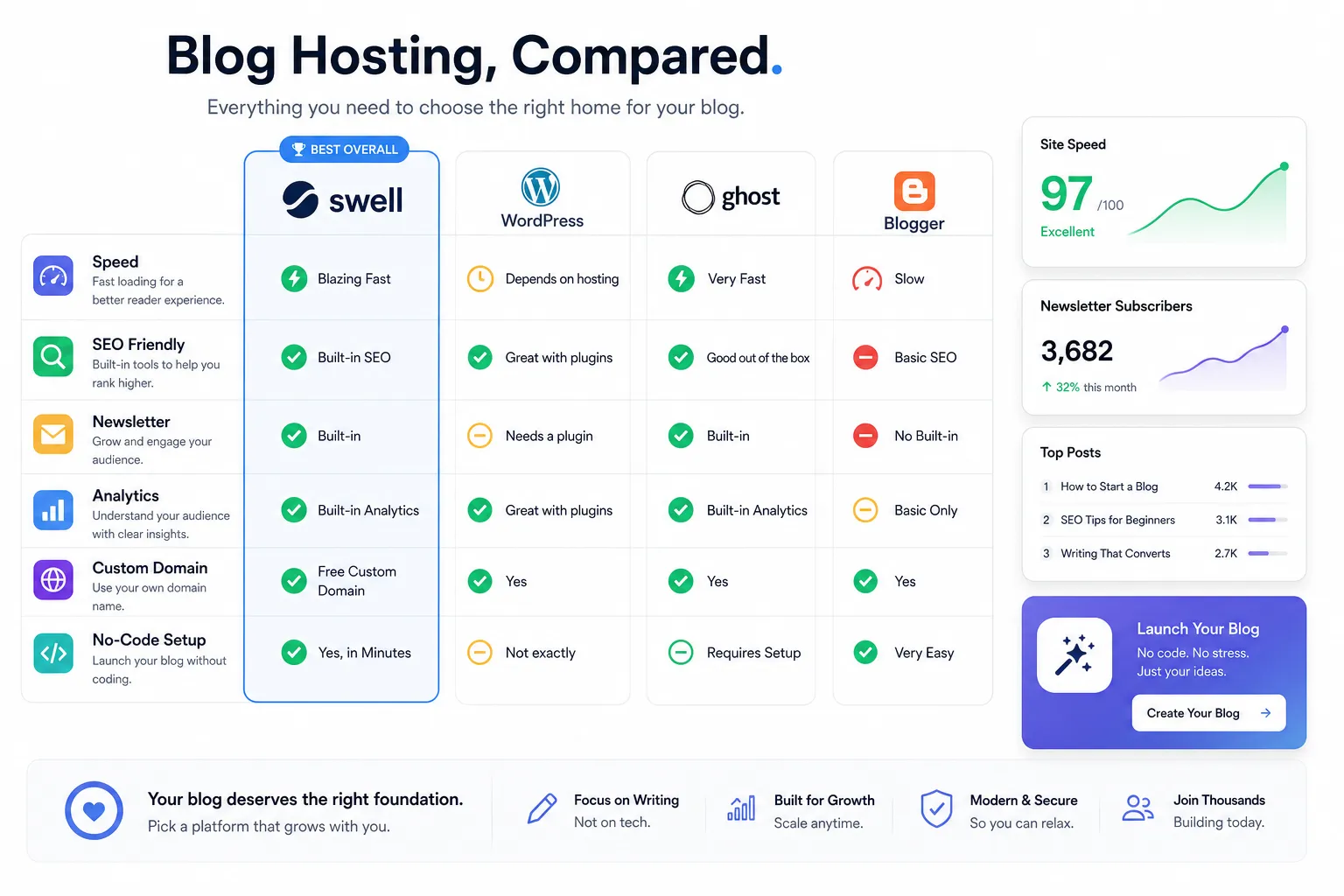
The Best Blog Hosting Platforms in 2026
1. BlogBowl

If your goal is to launch a company blog in minutes and actually turn it into a growth channel, BlogBowl is the strongest fit.
It is built for teams that want more than just a place to publish articles. With BlogBowl, you can run a blog, changelog, and help center from one platform, without setup headaches or engineering bottlenecks.
Why BlogBowl stands out
Launch in minutes with no-code setup
SEO-optimized templates built for speed and rankings
Built-in newsletter to collect subscribers, send campaigns, and track performance
Integrated analytics dashboard powered by Umami
Custom domains and flexible URL setups
Unlimited blogs, changelogs, and help docs on paid plans
Open-source core for control and extensibility
Multi-author collaboration for growing teams
Fast, mobile-friendly UX out of the box
This is where BlogBowl fills a major content gap competitors gloss over: most platforms force you to bolt together separate tools for publishing, email, analytics, and product communication. BlogBowl keeps it all in one workflow.
That means your team can:
Publish SEO content
Announce product updates
Maintain support documentation
Grow an email list
Track traffic and engagement
...without juggling plugins, scripts, or disconnected dashboards.
Best for
SaaS founders
Startup marketing teams
Product marketers
Customer success and support teams
Indie hackers launching content fast
Where it wins
BlogBowl is not trying to be a generic website builder. It is purpose-built for modern content operations. If your business needs content to drive acquisition, activation, and retention, that focus matters.
2. WordPress.org
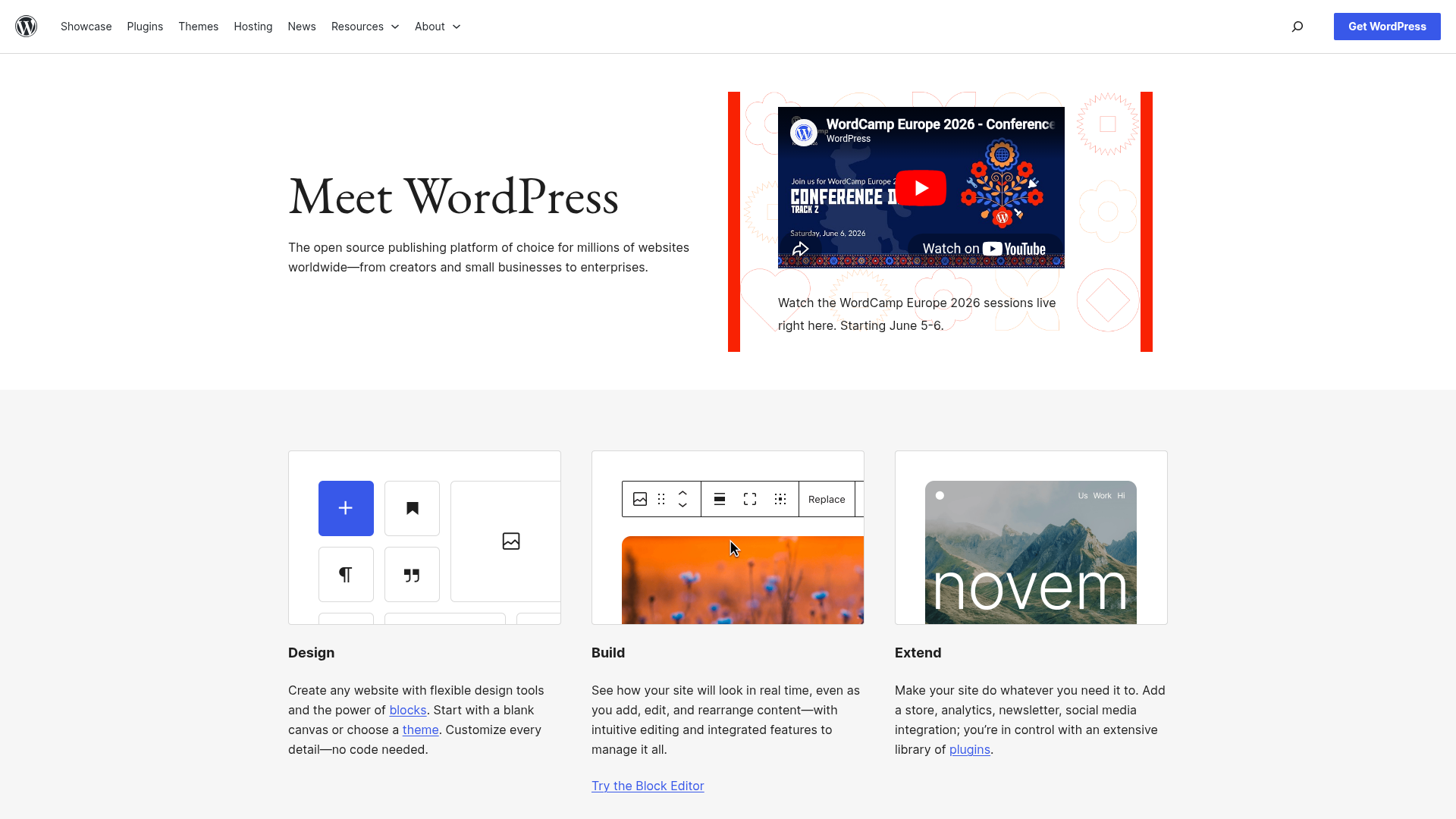
WordPress.org is still one of the most powerful blog hosting platforms on the market. It can do nearly anything, which is both its strength and its problem.
Pros
Extremely flexible
Huge plugin ecosystem
Strong SEO potential
Full ownership
Large talent pool and community
Cons
Setup can be slow
Maintenance is ongoing
Performance depends on your stack
Plugins often create complexity
Non-technical teams can get stuck fast
WordPress is great if you want full control and do not mind technical management. But for lean SaaS teams, it often turns into a maintenance project instead of a publishing engine.
3. Ghost
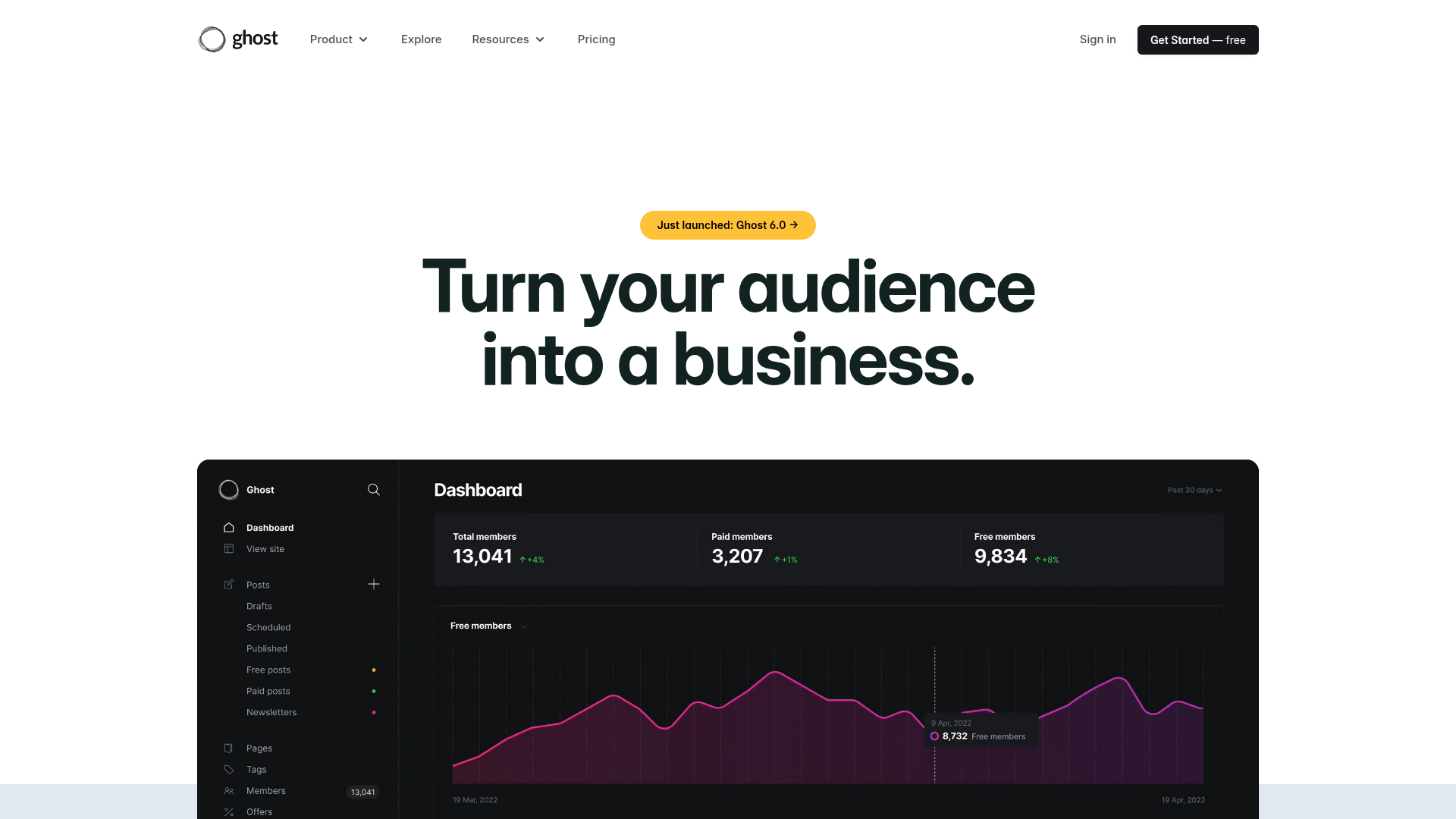
Ghost is one of the best modern blogging platforms for writers, publishers, and creators who like a clean editor and built-in memberships.
Pros
Fast and elegant
Native newsletter and memberships
Cleaner than WordPress
Good publishing experience
Modern feel
Cons
More limited than WordPress in breadth
Less ideal for help docs and changelogs
Can become costly depending on scale
Less all-in-one for broader SaaS content needs
Ghost is strong for editorial publishing. But if your company needs a blog plus product updates plus documentation, BlogBowl is the more focused fit.
4. Squarespace
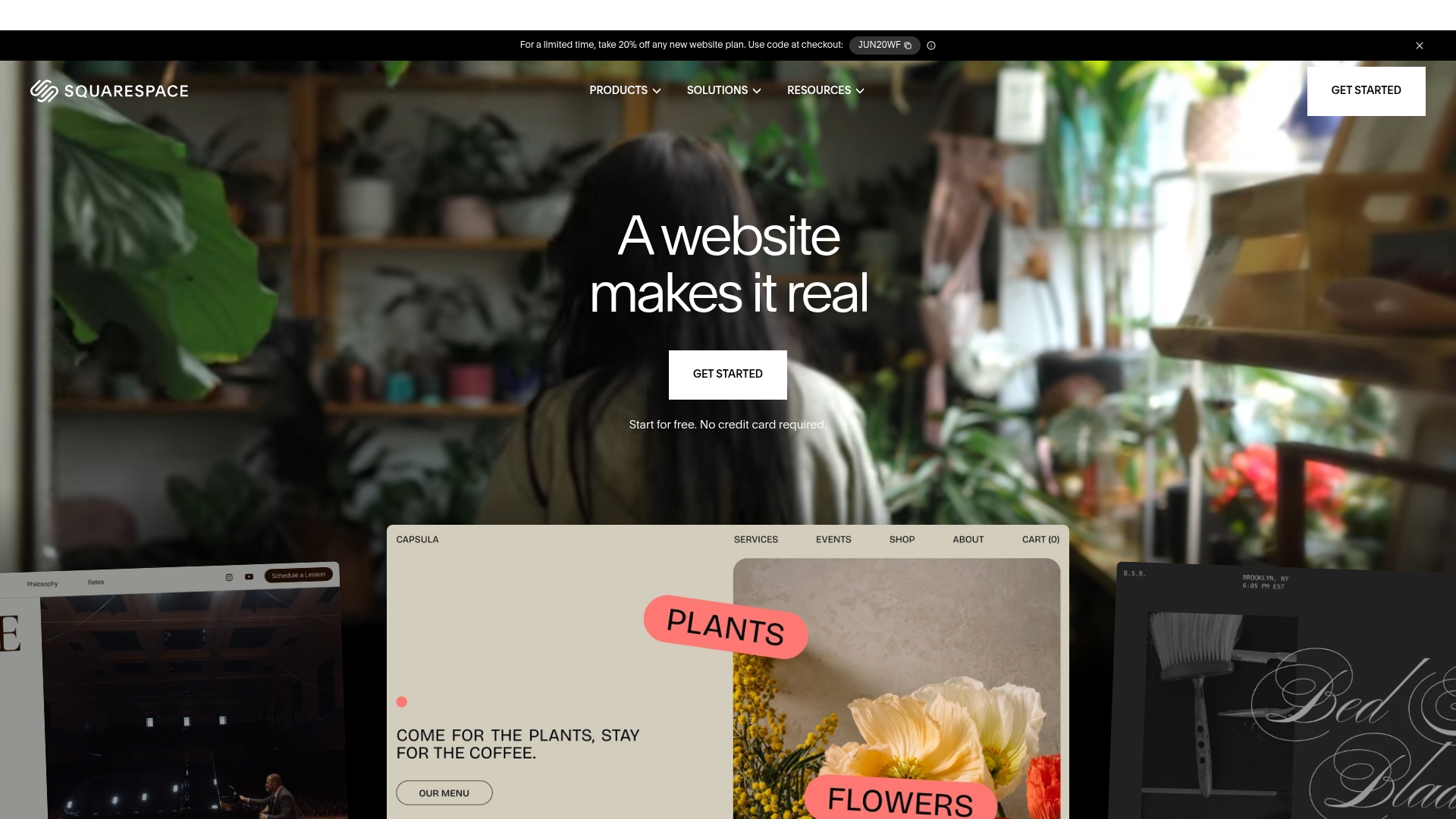
Squarespace is polished, visual, and easier to manage than WordPress. It works well for service businesses, portfolios, and simple company sites.
Pros
Attractive templates
Easy setup
Native business tools
Good all-in-one website builder
Cons
Blogging is not the core strength
SEO flexibility is decent, not exceptional
Content workflows can feel secondary
Less specialized for SaaS content marketing
If design-first simplicity is your top priority, Squarespace is a solid option. If publishing speed, SEO performance, newsletter growth, and content ops matter more, BlogBowl has the better product fit.
5. Medium

Medium is easy. You sign up and start writing immediately. That makes it attractive to people searching for free blog hosting.
Pros
Free to start
Built-in audience
Minimal writing experience
No setup
Cons
Limited ownership
Weak branding control
Not ideal as your main business hub
Email capture and conversion paths are weak
Platform risk is real
Medium is better treated as a distribution channel than your main content home. It can help you get discovered, but it is not the best blog platform for building a durable company asset.
6. Blogger

Blogger is one of the oldest free blog hosting options around. It is simple, familiar, and still functional for hobby blogging.
Pros
Free
Easy to use
Google-backed
Good for basic publishing
Cons
Dated experience
Limited modern SEO and growth features
Not ideal for teams
Weak on newsletters, analytics, and brand experience
For personal projects, Blogger is fine. For startup growth, it is far too limited.
Free vs Paid Blog Hosting: What Actually Changes
A lot of searches for free blog hosting come from people trying to reduce upfront cost. That makes sense. But free hosting usually trades away the exact features you need once your content starts working.
Feature | Free Platforms | Paid Platforms |
|---|---|---|
Custom domain | Often limited | Usually included |
SEO control | Basic | Stronger |
Branding control | Limited | Full |
Team collaboration | Rare | Common |
Newsletter tools | Rare | Often included |
Analytics | Basic or external | Better native reporting |
Scalability | Weak | Strong |
Ownership | Sometimes limited | Much better |
Free tools are good for testing ideas. Paid tools are better for building a serious content engine.
For SaaS teams, the question is not “Can I publish for free?” It is “Can I launch quickly and grow without rebuilding later?”
The Biggest Content Gap Competitors Miss
Most competitor articles compare blog platforms as if all blogs are the same.
They are not.
A personal journal, a creator newsletter, and a SaaS content hub have different jobs to do.
Here is what most articles fail to cover:
Your blog is now part of a bigger content system
For software companies, content is not just top-of-funnel. It supports:
SEO acquisition
Product education
Feature adoption
Release communication
Customer retention
Email audience growth
That means the ideal platform should support more than articles. It should also support changelogs, documentation, and newsletter workflows.
This is exactly where BlogBowl has a structural advantage over generic blogging platforms.
What to Look for in a Blog Hosting Service
Before choosing a platform, use this checklist.
1. Speed and technical SEO
If your pages are slow, rankings and conversions suffer. Look for a platform with lightweight templates, clean code, and mobile-first performance.
"Posts exceeding 3,000 words receive 3.5 times more backlinks and 2.4 times more social shares than shorter posts." - Digital Applied
Long-form content works best when the page experience is strong. Fast infrastructure matters.
2. No-code publishing
Your content team should not depend on engineering for every update. The best blog hosting websites let you publish, edit, and organize content without touching code.
3. Custom domains and flexible URLs
You may want your content on:
example.com/blogblog.example.comupdates.example.coma hosted subdomain while testing
BlogBowl makes this flexible, which is especially useful for teams migrating or launching fast.
4. Built-in newsletters
This is a huge one. Competitor articles mention newsletters, but often not enough.
If you create content and do not capture subscribers, you are losing repeat traffic and pipeline opportunities. BlogBowl’s built-in newsletter tools let you collect emails, send or schedule campaigns, and track opens, clicks, bounce rates, and geography from the same platform.
That is much cleaner than bolting on separate email software.
5. Analytics that teams actually use
A dashboard only matters if it helps you decide what to do next.
BlogBowl’s Umami-powered analytics keep things simple and actionable with traffic, unique visitors, average session time, referrers, locations, and reporting. For busy teams, this is often more useful than drowning in a complicated analytics stack.
6. Collaboration
If multiple people publish, review, or maintain content, you need multi-author support. This is critical for startups where product marketing, support, and founders may all contribute.
Which Platform Is Best for Different Use Cases?
Best for SaaS companies: BlogBowl
Because it combines blog hosting, SEO, newsletters, analytics, changelog publishing, and help docs in one system.
Best for maximum flexibility: WordPress.org
Ideal if you have technical resources and want endless customization.
Best for clean publishing and memberships: Ghost
Strong for editorial and subscription-first brands.
Best for polished general business websites: Squarespace
Good for design-led sites with lighter content needs.
Best for built-in audience reach: Medium
Useful as a secondary channel, not a primary asset.
Best for free hobby blogging: Blogger
Simple and basic, but not built for growth.
BlogBowl vs Traditional Blog Hosting Platforms
Feature | BlogBowl | WordPress.org | Ghost | Squarespace | Medium |
|---|---|---|---|---|---|
Launch in minutes | Yes | No | Mostly | Yes | Yes |
No-code publishing | Yes | Partial | Yes | Yes | Yes |
SEO-optimized templates | Yes | Depends | Yes | Decent | Limited |
Built-in newsletter | Yes | No | Yes | Limited | No |
Built-in analytics | Yes | Plugin/external | Limited | Yes | Limited |
Changelog + help docs | Yes | Plugin/custom | Partial | No | No |
Custom domain support | Yes | Yes | Yes | Yes | Limited |
Multi-author collaboration | Yes | Yes | Yes | Yes | Limited |
Open-source core | Yes | Yes | Yes | No | No |
Why BlogBowl Fits the Future of Company Publishing
The old way of content publishing looked like this:
WordPress for the blog
Another tool for newsletters
Another tool for analytics
Another tool for changelogs
Another tool for knowledge base docs
Constant setup, syncing, and maintenance
The new way is tighter and faster.
BlogBowl matches how modern teams actually work: publish quickly, rank faster, measure simply, and keep all content surfaces connected.

Final Verdict
If you want a hobby blog, there are plenty of free options.
If you want a flexible but complex stack, WordPress is still a contender.
If you want a clean publisher workflow, Ghost is strong.
But if you want the best blog platform for launching a high-performing content hub fast, especially for SaaS or B2B, BlogBowl is the most complete option in this category.
It removes the usual friction:
no setup headaches
no-code publishing
built-in SEO foundations
built-in newsletter growth
integrated analytics
support for blogs, changelogs, and help docs
custom domain flexibility
scalable collaboration for teams
In short: BlogBowl helps you go from idea to live content hub in minutes, not weeks.
If your team wants to publish faster, rank smarter, and grow an audience from one clean platform, BlogBowl is the one to try.
FAQ
What is the 80 20 rule for blogging?
The 80/20 rule for blogging usually means focusing most of your effort on the activities that drive the biggest results. In practice, that often means spending less time fiddling with tools and more time creating content, improving SEO, and promoting posts that can actually generate traffic and leads.
How long does it take to make $1000 per month blogging?
It depends on your niche, traffic, monetization model, and publishing consistency. For most people, reaching $1,000 per month can take several months to over a year, but the timeline gets shorter when you use an SEO-focused platform, publish consistently, and build an email list from day one.
What is replacing blogging?
Nothing is fully replacing blogging. Instead, blogging now works alongside newsletters, video, social media, changelogs, and help docs as part of a broader content ecosystem, especially for SaaS and B2B brands.
Can I earn $1000 from blogging?
Yes, you can. Bloggers earn through affiliate offers, services, products, sponsorships, memberships, and lead generation, but success usually comes from using the right blog hosting platform, targeting search intent, and turning readers into subscribers and customers.
How much do bloggers make per 1,000 views?
There is no fixed number because earnings depend on monetization method and audience quality. Some blogs earn very little per 1,000 views, while others earn much more if they sell software, services, or high-value products and capture traffic into email and conversion funnels.
Is blogging outdated?
No, blogging is not outdated. It remains one of the strongest channels for SEO, demand generation, education, and conversion, especially when paired with fast publishing, built-in newsletters, and analytics tools like those offered by modern platforms such as BlogBowl.